
5 Simple Reasons Your Metabolism Seems Broken
Part of the Blood Sugar guide
The science of metabolism is tricky and frustrating. How many times have you started a diet, followed it carefully, and seen zero change on the scale? A lot of my days are spent on metabolic concerns tied to weight, body composition, and thyroid function. Metabolism has become a buzzword wrapped in mystique, from juice cleanses to 14-day smoothie reboots that promise to “fix” it, and people usually end up frustrated when the results do not come.
In functional medicine, we see metabolism as a whole, always-evolving system shaped by many factors, not something a single diet, cleanse, or workout controls. In this article I share five simple reasons your metabolism might feel broken, and a reminder not to skip the basics before assuming something deeper is wrong.
Metabolism is complicated, the levers are simple
Human metabolism runs on an enormous number of chemical reactions and pathways. You do not need to understand all of them to change your body, but it helps to respect the complexity.
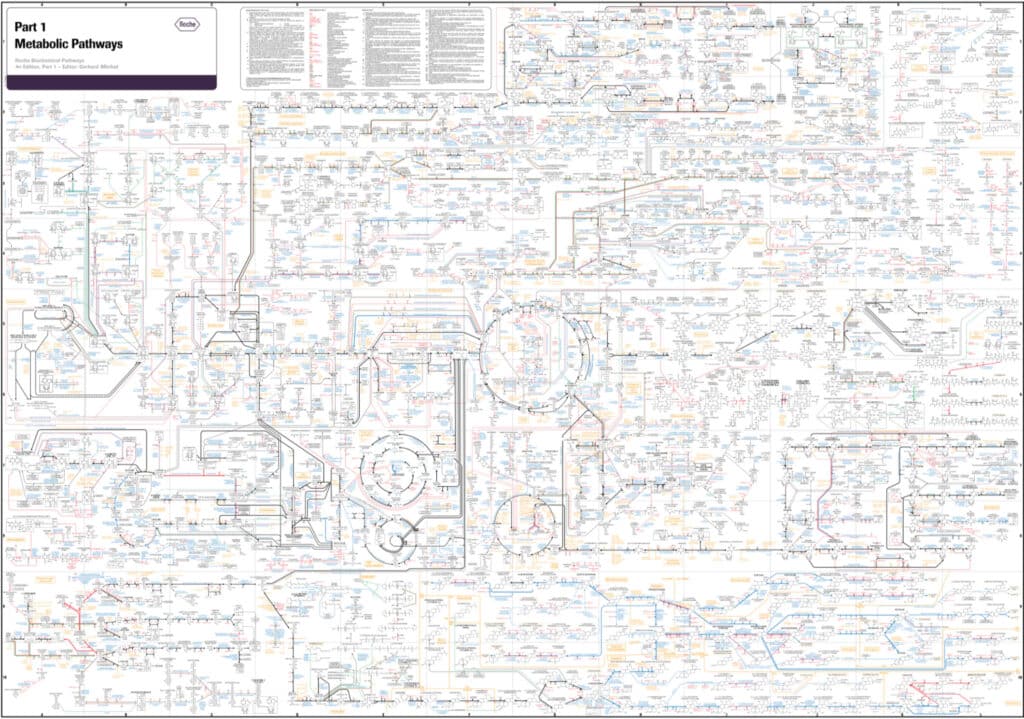
To simplify all of that for weight loss, here is a view of the interrelated, dynamic factors that influence weight loss.
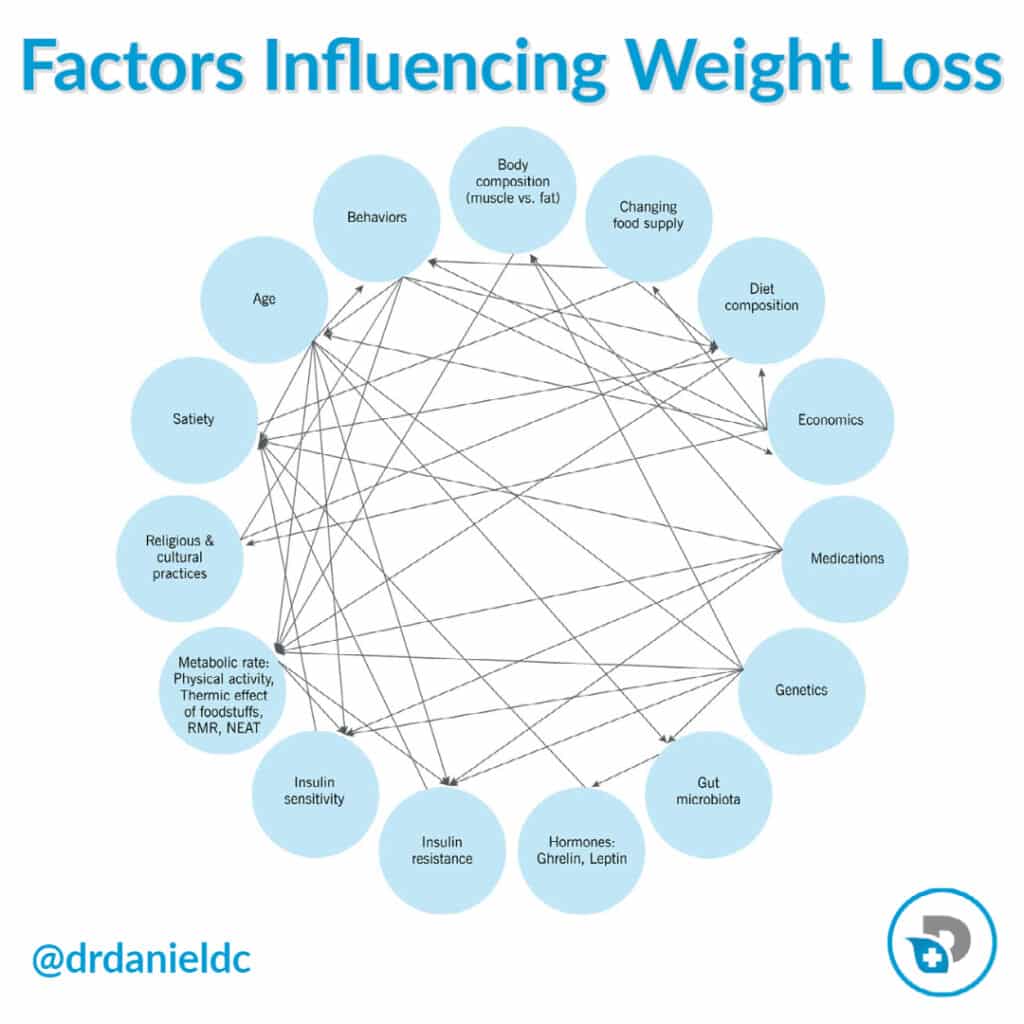
It is still complicated, but the same principles apply to everyone. Your body operates on the same laws of thermodynamics it always has. Your metabolism is not broken, and there are common, simple explanations for why it can feel that way.
1. Miscalculating energy intake
This is the most common issue I find. People who struggle to lose weight usually think they eat less than they do, and people who struggle to gain think they eat more than they do. It tends to come down to behavior rather than a mysterious metabolic defect. I do not love counting calories, and the way we count them is imperfect, but keeping a food record over a week or two is the most reliable way to see your real intake, the forgotten snacks, the drinks, the handfuls of this and that. Write it all down, then notice where the data differs from your perception.
2. Miscalculating energy output
In the same way, most people assume they move more, and more intensely, than they actually do. Three hard gym sessions a week is not the same as training thirty to forty hours a week or doing heavy manual labor. That uphill jog may have felt huge but only burned a couple hundred calories, and fitness trackers and machines can be off by 20 to 30 percent. Rather than trusting the gadget, track your own movement, how many minutes a day you truly move, how that compares to how much you sit, and at what intensity, and adjust toward your goal.
3. Inconsistency
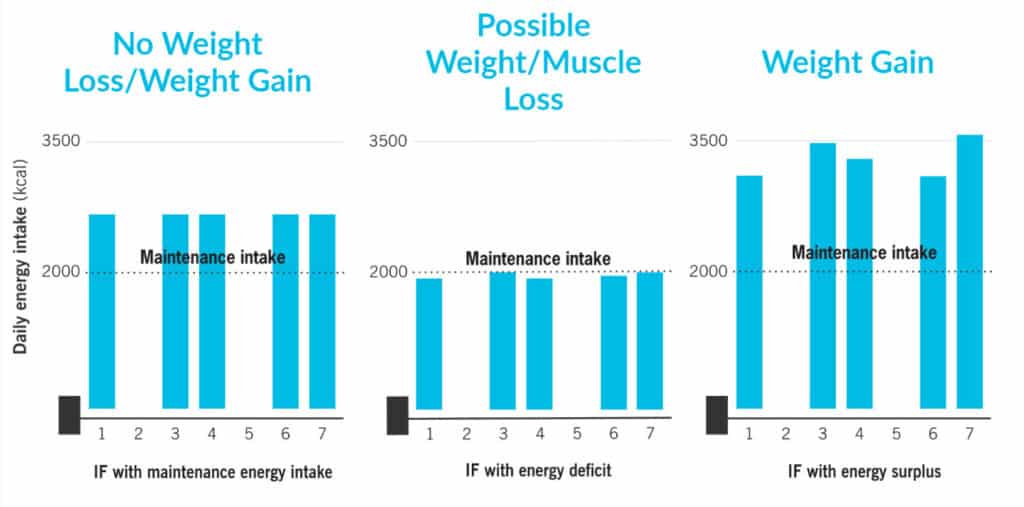
Many people follow a plan during the week, then let the weekends, evenings, or special occasions become a free-for-all. Sometimes that is habit (“I deserve a treat”), sometimes physiology (strict restriction Monday to Friday drives rebound hunger), and often a mix with stress and poor sleep raising appetite and lowering self-control. Intermittent fasting shows this clearly. Take a 5:2 protocol with a 2,000-calorie-a-day target:
- Person 1 eats 14,000 calories across the week as planned and loses or maintains weight.
- Person 2 undereats to 9,800 calories, feels drained, trains less, and stalls.
- Person 3 eats far more on non-fasting days, hitting 16,100 calories, and gains weight despite “fasting.”
4. Working hard at the wrong things
There is a difference between difficult-easy and difficult-difficult. Difficult-easy tasks feel like effort but accomplish little, working late, staying “busy” and stressed, grinding through a familiar routine. Difficult-difficult tasks are the ones we avoid but that actually create change, like facing the emotions we use food to cope with. Many people bury themselves in difficult-easy actions: restricting calories without eating nutritious food, going “beast mode” on every workout then crashing on the couch, cutting gluten but eating processed gluten-free treats, or willpowering habit change with no real system. Ask yourself honestly whether you are doing the same things over and over, or the harder things that would make a difference.
5. Magical thinking
Magical thinking means seeing patterns or causes that are not there, or hoping something is true despite evidence otherwise. With metabolism it sounds like “on this diet, calories don’t matter,” “all I had was bulletproof coffee” (several hundred calories), “I walked around the block, so I earned this,” or “it’s organic, so it must be fine” while finishing a box of organic crackers. The principle is the same: we are not connecting cause and effect, or following the data our own experience is giving us.
Action steps
Weight loss is a science, not a belief system, which means you can measure. The catch is that nobody fits the textbook math perfectly, and that mismatch is where frustration comes from. The tool that solves it is outcome-based decision making:
- Start with a working hypothesis: calculate your caloric needs, and to lose weight, eat slightly less than maintenance. Stay consistent and record what you eat.
- Measure your weight after a week or two. Closer to your goal, or further?
- If you are moving in the right direction, stay the course.
- If not, change one thing: trim intake a little and add some activity or intensity.
- Repeat as needed.
It does not matter if your body does not match the theoretical math. What matters is that your metabolism follows known principles of physiology, including energy balance. Start with an informed guess, stay consistent, and revise based on real feedback until you find what works.
Your life is your medicine.
If something here rang true for you, the next step is a conversation. Start with a free consult, then we can work on your baseline together.

Reviewed by Dr. Daniel Gonzalez, DC.